Strategic Transformation: The Blueprint for a Circular and Climate-Neutral Economy
Hovhannes Adajyan · June 10, 2026 · 10 min read
Abstract
A strategic roadmap for moving beyond the linear economy toward a circular, climate-neutral, and resilient industrial model based on resource efficiency, clean technologies, remanufacturing, green energy, and regulatory transformation.
Strategic Transformation: The Blueprint for a Circular and Climate-Neutral Economy
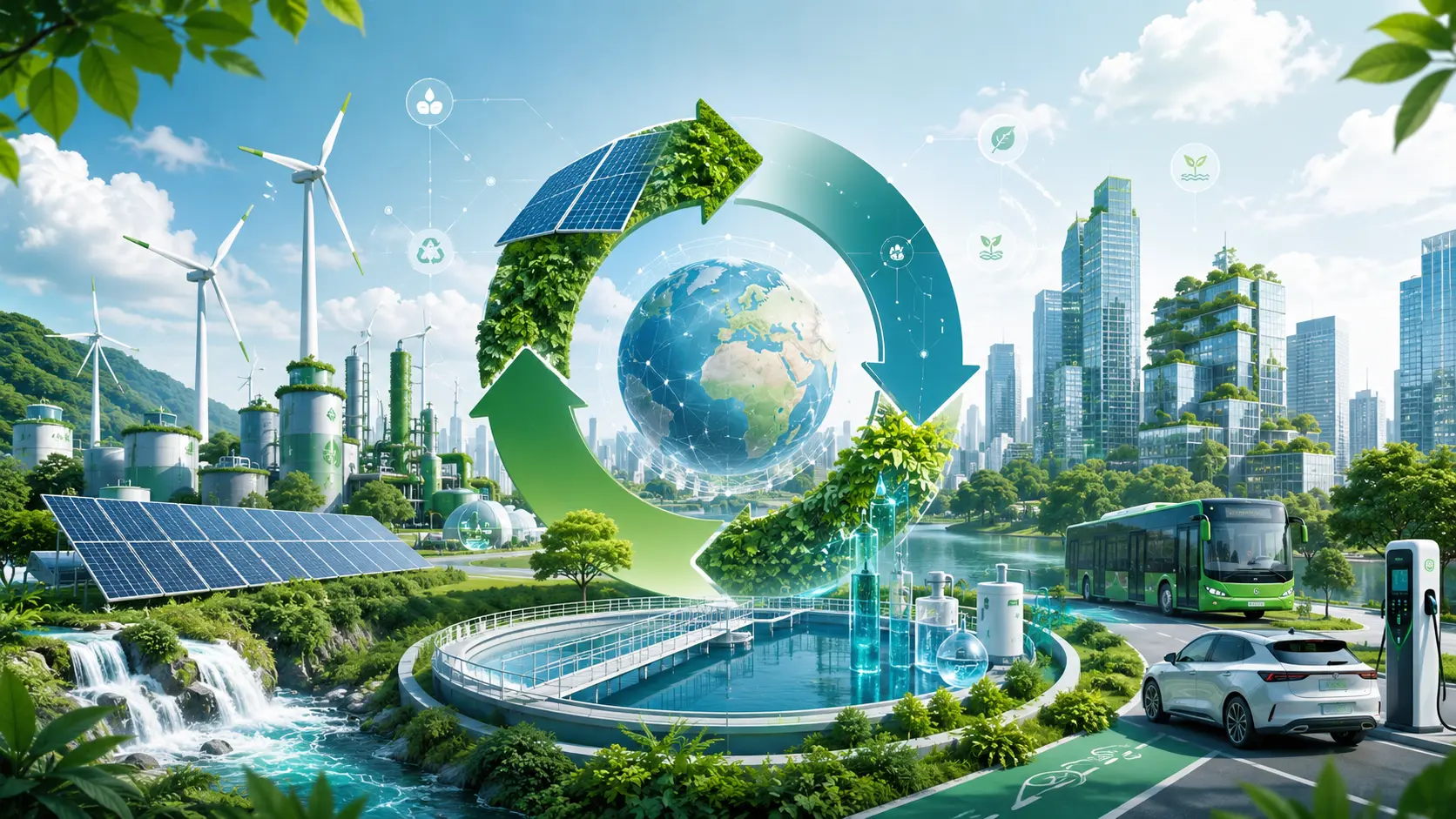
1. The Strategic Imperative: Moving Beyond the Linear Paradigm
In the current industrial landscape, the transition from a “take-make-dispose” model to a circular architecture is not a discretionary environmental initiative. It is a critical strategic evolution for long-term economic survival.
By 2050, global resource consumption is projected to reach a level equivalent to three planet Earths. To operate within planetary boundaries, economies must decouple growth from resource extraction and build systems that preserve value, reduce waste, and strengthen resilience in an era of scarcity.
Strategic Comparison of Economic Architectures
| Dimension | Linear Model: Value Destruction | Circular Economy: Value Regeneration |
|---|---|---|
| Resource Use | High-extraction; “Take-Make-Use-Dispose” | Perpetual material circulation; resource decoupling |
| Waste Management | Systematic waste generation; landfill reliance | Waste elimination; secondary raw materials as feedstock |
| Value Retention | Rapid depreciation and value destruction | Value compounding through repair, reuse, and remanufacturing |
| Environmental Impact | Ecological degradation and climate risk | Regenerative impact and minimized carbon footprint |
This transformation is a direct response to systemic risks caused by resource extraction, biodiversity loss, climate pressure, and supply chain fragility. From a strategic perspective, biodiversity loss is not only an ecological challenge; it also creates industrial and economic risk by weakening the ecosystem services that support production, agriculture, water systems, and raw material security.
The goal is to move beyond mitigation and toward a model where value is compounded, not destroyed, across every product lifecycle.
2. The Multi-Trillion Dollar Revenue Frontier
Strategic leadership requires recognizing that early adoption in the green economy is becoming a major engine of 21st-century growth. Organizations and countries that proactively align with this transition can unlock major capital flows, new markets, and industrial advantages.
Key Strategic Opportunities
* Financial Frontier: The transition to a green economy is projected to generate between $9 trillion and $12 trillion in new annual revenue by 2030. * High-Growth Sectors: The opportunity is especially concentrated in transport, power, hydrogen, clean technologies, and resource-efficient manufacturing. * Competitiveness Proxy: The EU’s circular material use rate remains low. Increasing circularity can become a proxy for industrial competitiveness and protection against market volatility.
Early adopters will gain a decisive advantage as resource efficiency becomes a key differentiator in high-stakes global markets. However, building this financial resilience requires navigating a landscape of shifting geopolitical forces.
3. Navigating Geopolitical Shocks and Resource Volatility
Geopolitical risks, including the COVID-19 pandemic and the Russia–Ukraine conflict, have acted as unintended catalysts for the energy transition. These shocks disrupted status quo operations but also exposed the fragility of fossil-fuel-dependent ecosystems.
The result is an accelerated move toward localized, secure, and circular energy and production frameworks.
To ensure geopolitical adaptability, leadership must execute the following:
* Strategic Resource Hedging: Transform recycling from a cost center into a resource hedge that stabilizes supply against volatile primary raw material markets. * Supply Chain Sovereignty: Reduce dependence on high-risk international markets by securing high-standard local feedstock channels. * Industrial Resilience: Pivot toward green technologies that reduce the asymmetric burdens placed on energy-intensive sectors during global crises.
Resource scarcity has fundamentally rewritten the profitability margin for material recovery. Price spikes in battery metals such as lithium, nickel, and cobalt have made recovery from secondary sources increasingly important. This shift requires a reimagining of industrial facilities and material recovery systems.
4. The Value Retention Engine: Remanufacturing Excellence
The Value Retention Engine is the industrial framework required to maintain the added value of products at the end of their initial use-cycle.
This is not simply a waste management strategy. It is a mechanism to keep complex engineering, valuable components, and critical raw materials within economic control.
Four Industrial Imperatives
- Recycling Innovation: Develop processes to handle historically non-recyclable feedstock.
- Feedstock Conversion: Return complex waste streams into high-purity raw materials.
- Compounding Value: Enable a second life for high-value components through precision remanufacturing.
- Standards Leadership: Secure supply chains through rigorous material purity and traceability standards.
This model depends on the ecodesign imperative. Since a significant share of a product’s environmental impact is determined at the design phase, “Design for Recycling” and Life Cycle Assessments are essential prerequisites for operationalizing circular value retention.
5. Sector-Specific Deep Dives: Transport and Clean Energy
Decarbonizing shipping and energy is a strategic necessity for achieving long-term climate targets. Shipping facilitates around 90% of global trade and contributes significantly to global greenhouse gas emissions.
A radical technological pivot is required.
Green Ammonia and Maritime Transport
Ammonia is emerging as a promising zero-carbon candidate for long-distance maritime transport because of its storage advantages compared with hydrogen.
Dual-fuel technology can allow vessels to transition between conventional fuels and ammonia, supporting stable, high-load solutions for transoceanic routes while reducing carbon emissions over time.
Clean Battery Production
The clean technology value chain must also eliminate toxic dependencies to support circularity. In battery production, circular industrial strategy should prioritize:
* Water-Soluble Binders: Replacing PVDF with Carboxymethyl Cellulose to reduce toxic solvent use and make electrode structures easier to process for material recovery. * Bio-Based Solvents: Using bio-based and less hazardous solvent alternatives where possible to reduce environmental and health risks in production and recycling.
6. The Regulatory Roadmap and Governance Framework
Industrial leadership must stay ahead of the regulatory curve, especially as the European Union advances its circular economy and clean industry agenda.
Core Legislative Pillars
* Ecodesign for Sustainable Products Regulation: A cornerstone for circular product compliance. * Right to Repair: Extending product lifecycles through stronger repairability requirements. * Industrial Emissions Regulation: Integrating circular practices into industrial standards and best available techniques.
Leadership Compliance Directive
* Design Audit: Align product development with ecodesign standards to reduce environmental liability. * [ ] Metric Integration: Use circular economy monitoring indicators to benchmark internal material flows. * [ ] Stakeholder Synthesis: Engage with circular economy platforms and industrial networks to exchange best practices.
7. Strategic Implementation: Building Local Resilience
The transition to a circular economy demands a shift from fragile global supply chains to decentralized local remanufacturing hubs powered by renewable energy.
These hubs can reduce the economic and environmental costs of shipping used materials across long distances while strengthening resource sovereignty and local industrial capacity.
Executive Directive: Principles of the Green Economy
The following five pillars should be integrated into 2026 operational planning:
- Wellbeing: Prioritize human, social, and cultural capital alongside fiscal growth.
- Justice and Governance: Establish transparent, accountable institutions that protect decision-making from vested linear interests.
- Incentivized Growth: Create high-skill jobs in emerging circular remanufacturing sectors.
- Resource Efficiency: Optimize material use and maximize the value of secondary feedstocks.
- Low-Carbon Architecture: Expand electrification and support carbon-free fuels such as green ammonia across logistics and production.
By doubling circularity and accelerating clean industrial transformation, countries and companies can build a more resilient, competitive, and climate-neutral future.
This is not merely a path to sustainability. It is the blueprint for the next generation of global industrial leadership.
Sources and Further Reading
- UNEP — Global Resources Outlook 2024
- European Commission — Circular Economy Action Plan
- European Commission — Circular Economy
- European Commission — Clean Industrial Deal
- European Commission — Ecodesign for Sustainable Products Regulation
- European Commission — Right to Repair
- European Commission — Consultation on the Circular Economy Act
- European Environment Agency — Circular Material Use Rate in Europe
- Ellen MacArthur Foundation — Circular Economy Introduction
- International Maritime Organization — Greenhouse Gas Emissions
- McKinsey — Green Business Building Opportunity
Cite this publication
Hovhannes Adajyan. “Strategic Transformation: The Blueprint for a Circular and Climate-Neutral Economy.” Institute of Digital Economy, 2026.